
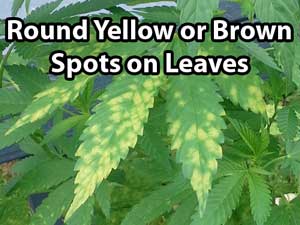
Leaf Septoria or leaf blotch is known to cause damage to many crops and cannabis is no exception. Usually affecting lower leaves this fungus tends to be seen most in early spring and summer and not as much in winter.
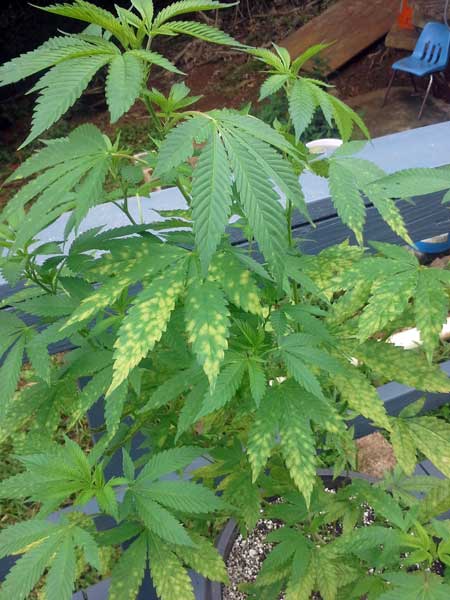
When dealing with early onset of Septoria you will notice chlorotic specks that become irregularly shaped and eventually become lesion that are brown or reddish in color. These spots appear yellow hence the yellow spot. While the plant grows the spots grow and the centers will become bleached or lighter than the leaf tissue around them. As the fungus grows it will developed small black spots in the lighter area that eventually sporulate and infect more plants.

 Solution to Leaf Septoria
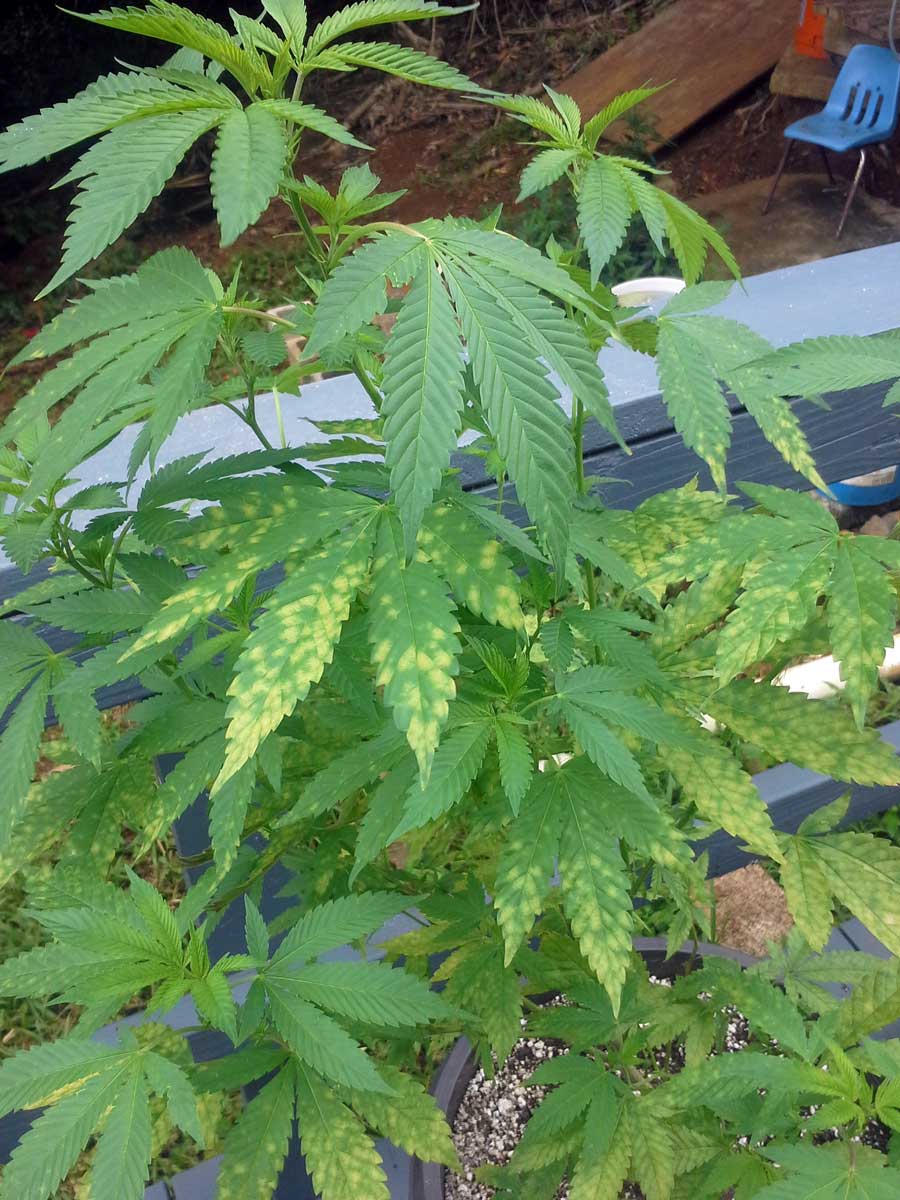
This fungus spores may stay in the soil over the winter, and attack your plants in the summer. Spores are also easily spread by wind and rain.
Spores easily infect your plants from the overwintering in the soil. When warm wet spring weather starts up the spores start to infect other plants and are easily spread by wind.
- As soon as you notice these spots you can remove leaves, controlling the infected plant tissue is step 1
- Remove cluttered leaves to allow more air flow and help prevent further transmission
- Don’t add extra moisture, avoid getting water near bottom of plant on leaves
- Maintain a healthy soil zone, remove dead material and prune the plant as to remove as much lower plant mass as possible
- When you notice a break out remove that plant or keep it away from healthy plants till safe
- A good way to avoid Septoria year to year, is move sites rotate fields
- Copper and/or broad spectrum based fungicides work well once an outbreak has started.
- Use Labels rates early in and you should be fine


More Cannabis Pests, Bugs & Viruses

